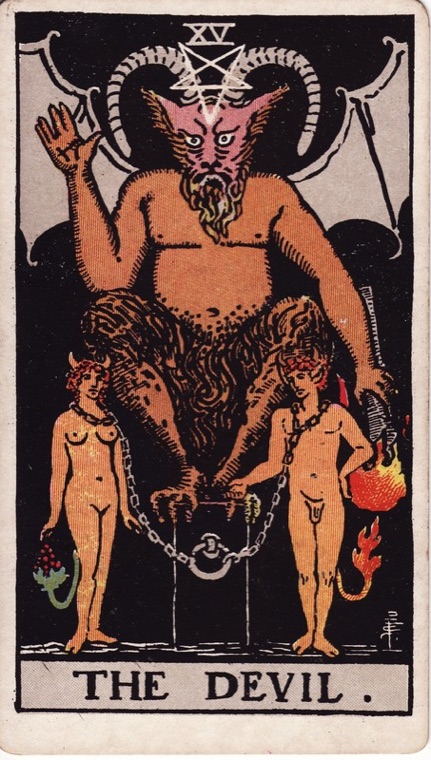
The Devil
Upright
Look closely: the chains are loose. The Devil is the deal you keep making — the habit, the relationship, the story about yourself — that once served you and now holds you. Naming the attachment is the release; the fire you fear is mostly your own.
Reversed
The first deep breath after waking from the spell — awareness returning, the leash slackening. Reversed, the Devil marks real progress in breaking free. Keep going; old chains sometimes rattle loudest just before they fall.
Where is this energy showing up in your life right now?
Why this card looks like this
The painting is not decoration — every object in it is doing a job.
A horned figure sits on a half cube — stable on one side, hanging upside down on the other — with an inverted pentagram above his head and a torch pointing upward. Two people are chained at the bottom, and the chains are so loose that both could step out. He does not hold them; he simply stands between them and the exit.
Look closely at the two chained figures and you will find they have grown small horns and tails — they have been in this arrangement long enough to start resembling it. That is the cruellest detail on the card: captivity that becomes identity. And the grapes at their feet are the fruit of the Tree of Knowledge from The Lovers, grown here in a different garden.
Ask what the querent has started calling their life. The Devil usually shows up around a habit, a job or a story about themselves that once served them and now runs them. The good news is in the slack chain: nothing here is actually locked. The work is noticing what you would lose if you walked away, and noticing that the answer is usually smaller than expected.